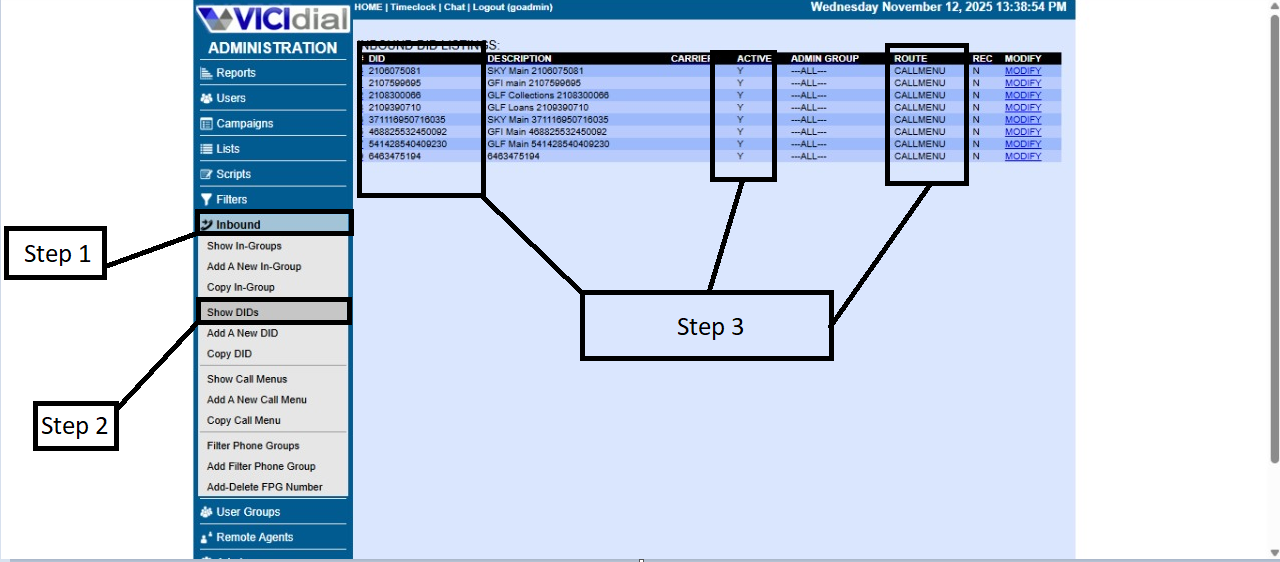
How to create a DID
In this library, you will learn how to register DIDs step by step — that is, the numbers that will be entered to be used for calls in Crocodial.
- How to access the page to register DIDs
- How to create the DIDs registry
- How to add DIDs to the server
How to access the page to register DIDs
First, you will need to access the following webpage: [http://sip-gw.croco-dial.net/admin/config.php]
Warning: Ensuring that your VPN is activated.
Next.
Click on the logo located at the center of the page, and log in using the credentials that have been assigned to you. Once completed, you will have successfully entered the site.

How to create the DIDs registry
In this case, you will need to follow a series of steps designed to create the DID extensions.
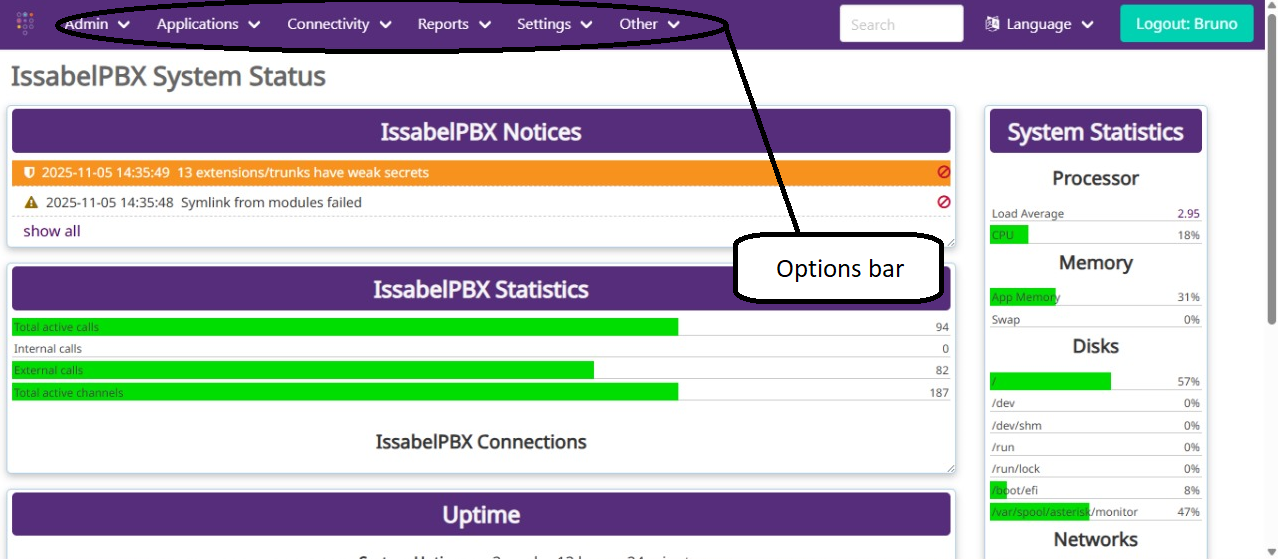
As the first step, once you are inside the IssabelPBX webpage, locate the options menu situated on the top navigation bar of the page.
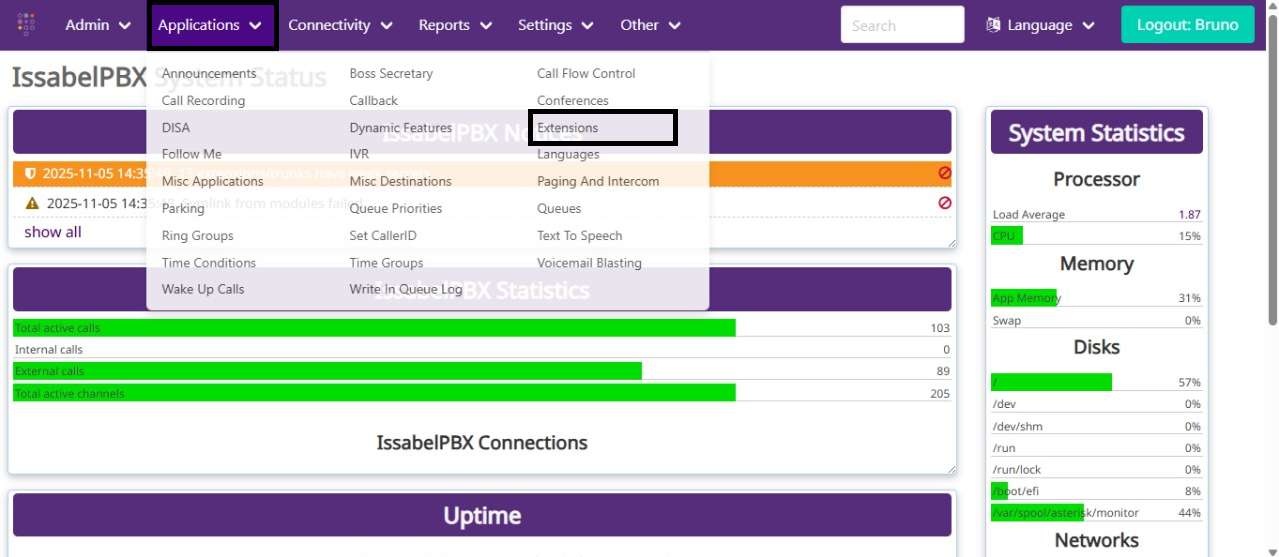
You will need to open the “Applications” option, which will display a multi-option menu. From this menu, select the “Extensions” option.
Once you are inside the “Extensions” section, you will need to click the “Submit” button to begin the first step in the extension setup process.
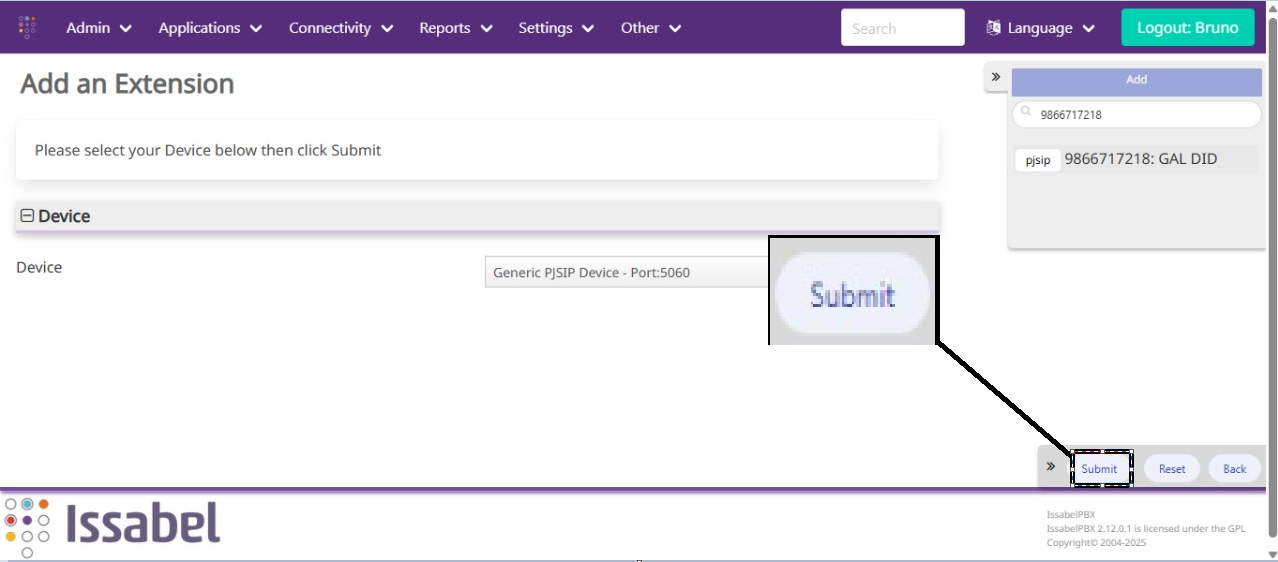
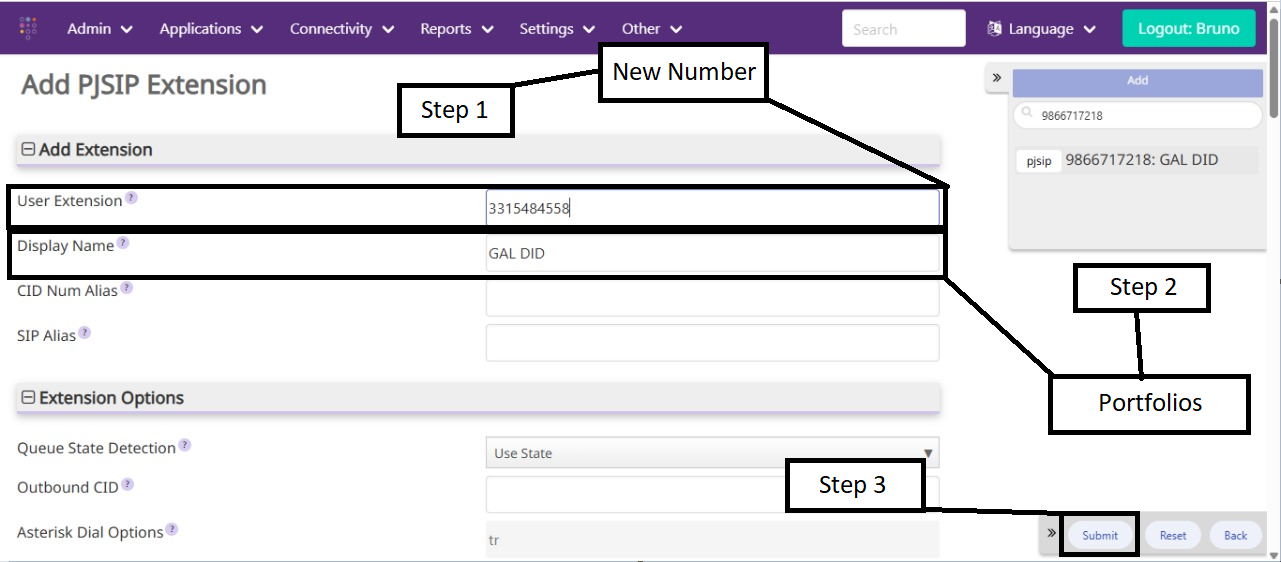
Once inside, you will need to fill in the “User Extension” and “Display Name” fields with the information that has been assigned to you. In the “User Extension” field, enter the new number, and in the “Display Name” field, enter the corresponding portfolio. To complete this step, click “Submit” to temporarily save this part of the process. However, please note that pressing “Submit” does not permanently save the changes. Proceed with caution, as I will explain how to fully save the configuration in later steps—this action only secures the changes for the ongoing setup process.
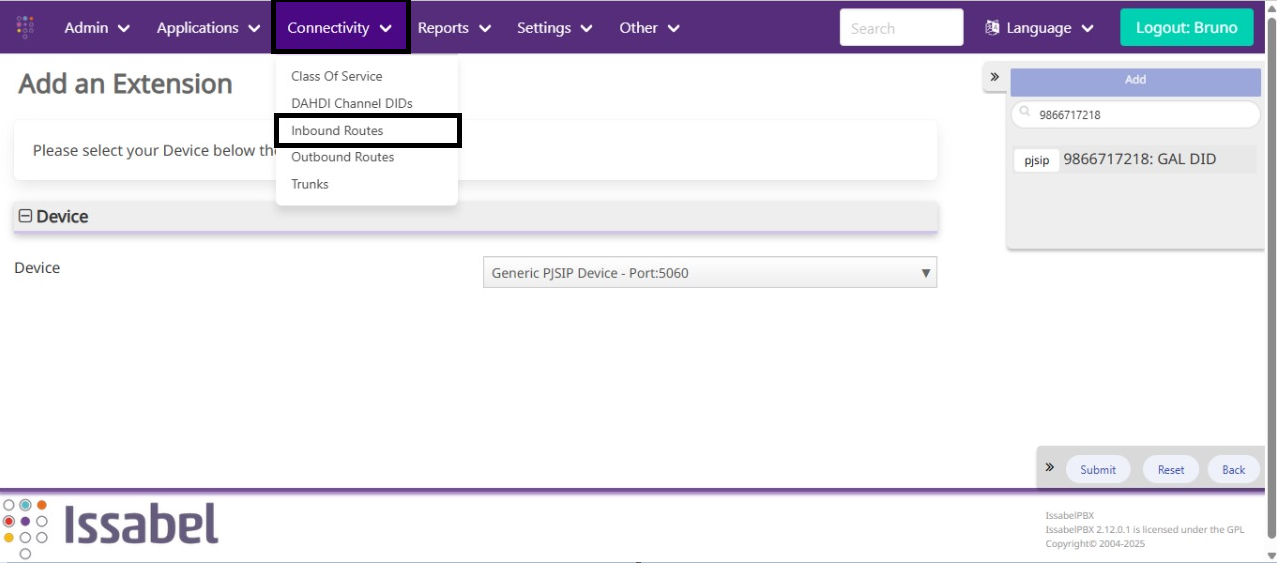
Despues de presionar sumit la pagina te regresara al principio y esta vez seleccionaras la opcion de Connectivity y se te abrira otra barra de opciones donde seleccionaras Inbound Routes
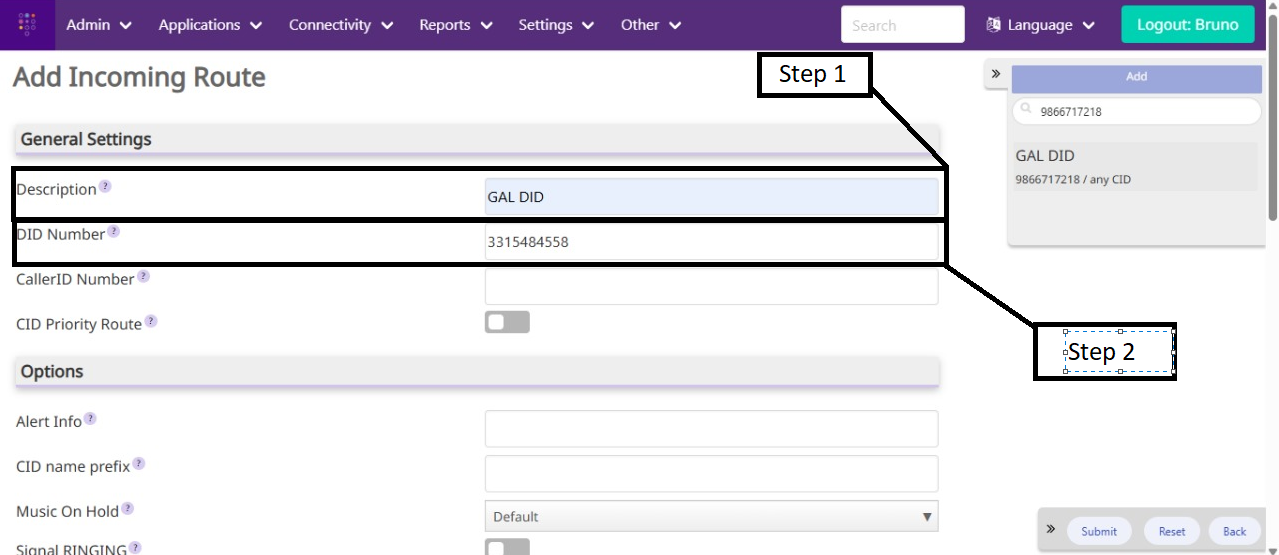
When you access the Inbound Routes section, you will need to complete four fields — the first two are located under General Settings, and the last two under Set Destination.
The first two fields to fill out are:
-
Description: Enter the portfolio corresponding to the number.
-
DID Number: Enter the new number you are currently working on.
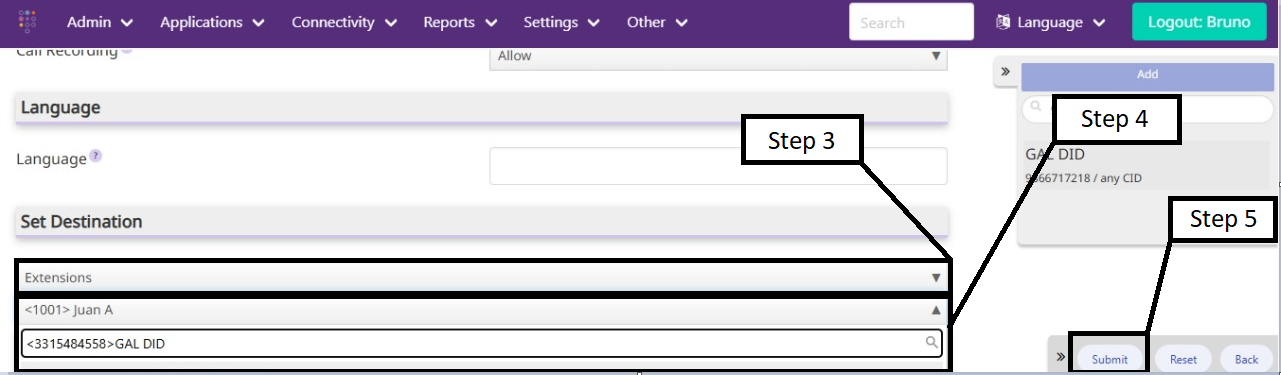
Next, scroll down to the bottom of the page to find the Set Destination subsection. There, you will need to fill in two additional options:
-
In the first option, select “Extensions.”
-
In the second field, enter the same number used in the previous steps (it is not necessary to include any special characters—typing only the number will display the corresponding option).
Finally, click “Submit” to save the changes made.
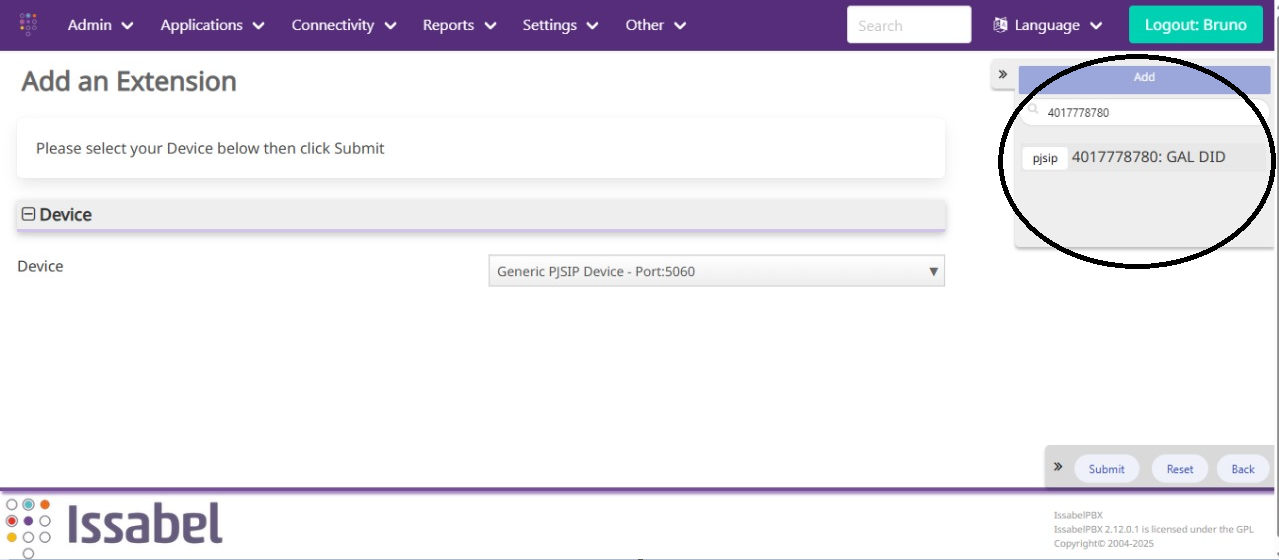
Once the number has been registered, return to the main page. Then, click on “Applications” again and select “Extensions.” You will notice that, in the upper-right corner of the page (just below the “Logout” button), there is a search field. In that field, enter the number you are currently working with. When the corresponding number appears below, select it to continue.
After selecting the number, several tables will appear. Locate the one labeled “Device Options.” Within this table, you will find a field called “Secret.” The content of this field will appear blurred until you hover your cursor over it.
Using the information you have obtained, you will now need to create the registration string. Follow these steps carefully:
-
Insert the number you are registering at both the beginning and end of the string:
3315484558----------------3315484558 -
Add the password you retrieved from the “Secret” field in the middle:
3315484558:381af6662eef9a2db11f4cd8003809fc------3315484558 -
Include the server address as follows:
3315484558:381af6662eef9a2db11f4cd8003809fc@sip-gw.croco-dial.net/3315484558
Finally, to simplify the registration process in the future, add the prefix “register =>” before the entire string:register => 3315484558:381af6662eef9a2db11f4cd8003809fc@sip-gw.croco-dial.net/3315484558

How to add DIDs to the server
First, you will need to access the Terminus application. Once inside, add or open the server to which the DIDs will be assigned.
Warning: Make sure the corresponding VPN is activated before proceeding.
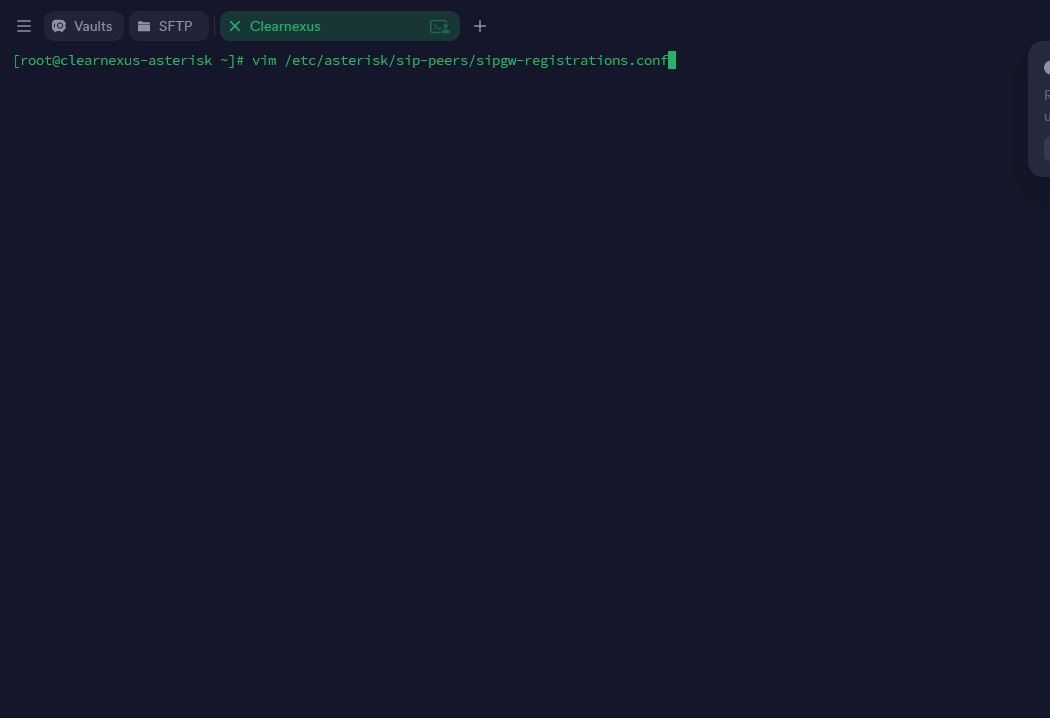
Once you are in the server terminal, you must verify that the registration strings exist. To do this, enter the following path in the terminal:
After entering this path, you should see the existing registration records.
If no records are found, they must be created (please notify the team in this case).
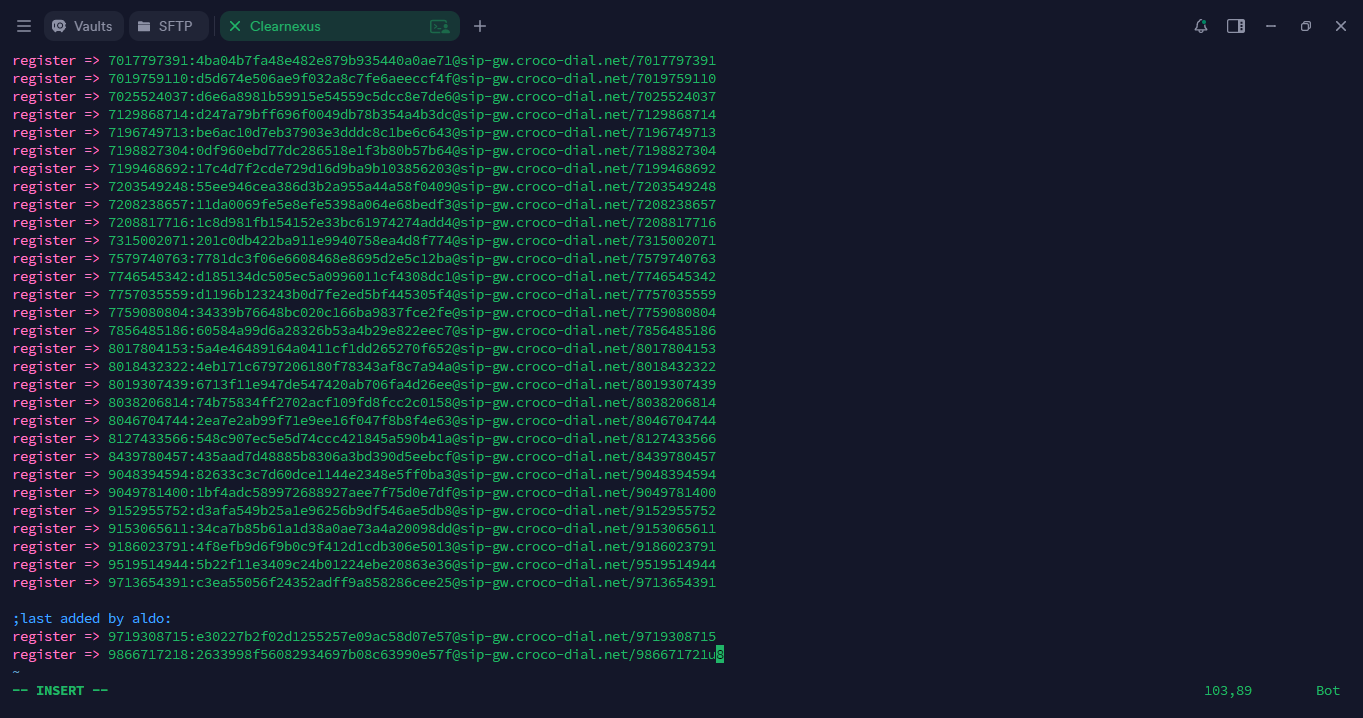
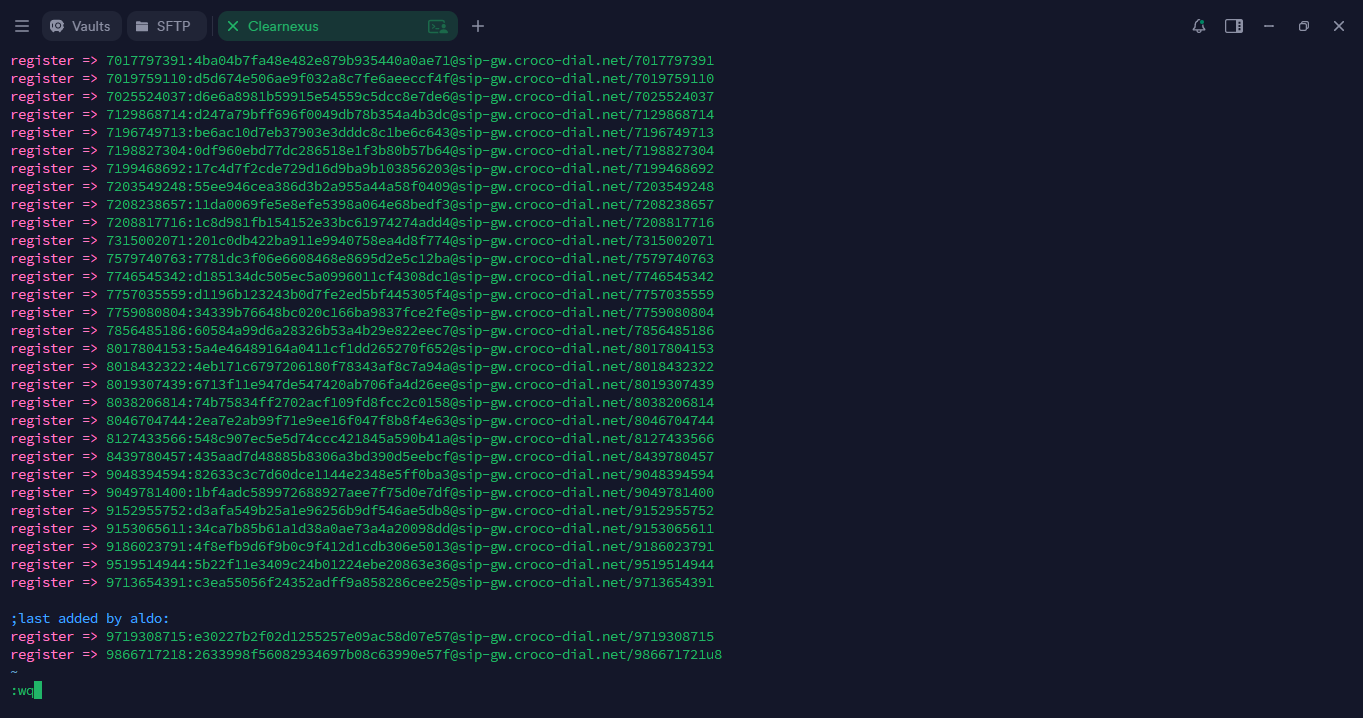
Once inside, you will see all the registration records that have been created within the system at that path. There are two possible actions you can take:
-
Press the “I” key. The word “INSERT” will appear at the bottom of the screen, allowing you to add the registration entries exactly as they were configured in the extension.
-
To exit insert mode, press the “Esc” key. The word “INSERT” will disappear, indicating that you can now exit the file.
To save your changes and exit the terminal path, type the following command:
Once back at the main terminal, you will need to verify that the DIDs have been added correctly. To do this, you must access Asterisk by typing the following command in the terminal:
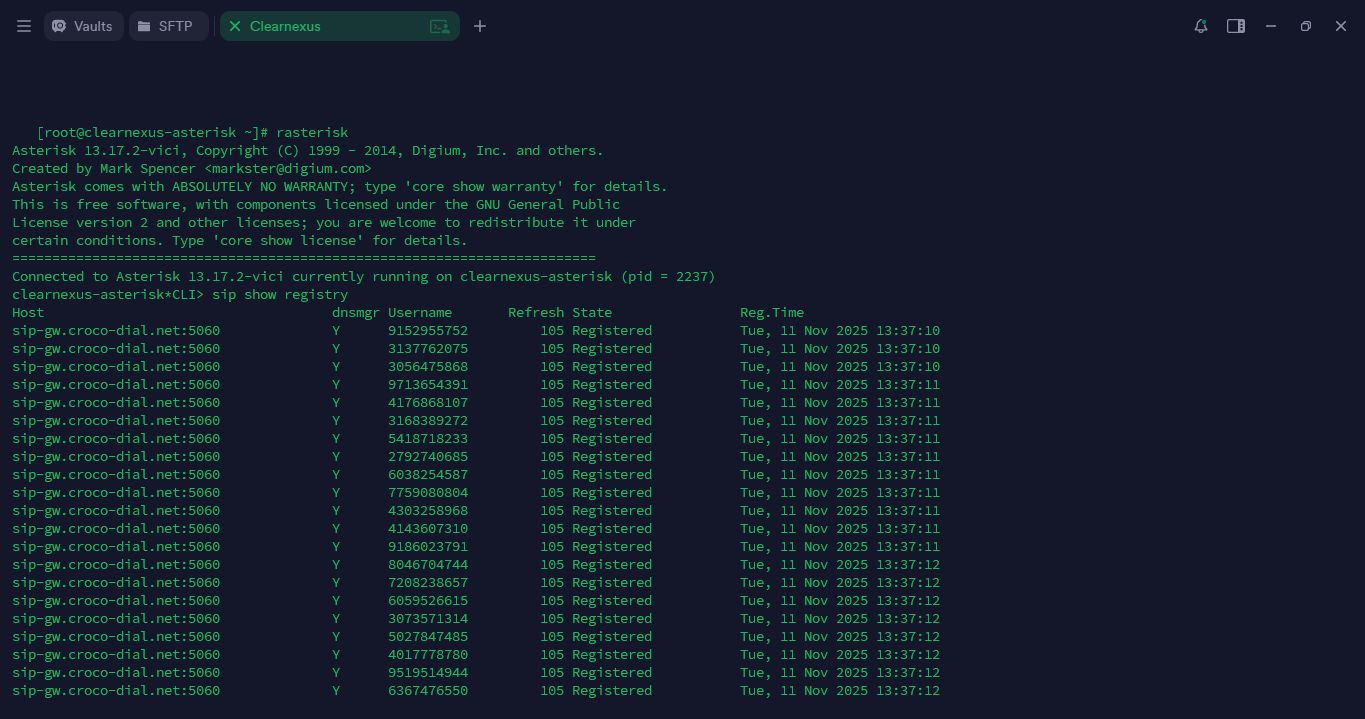
To confirm that you are inside Asterisk, the terminal prompt should now display:
Next, you will check the registration lists to ensure there are no duplicates and to distinguish the newly added entries from the existing ones. Enter the following command:
Please note that the lists may not have been updated yet—this initial check is only to compare existing and new entries. To update the lists, run the following command:
This will refresh the list with the newly added numbers. Then, run the previous command again:
Now verify that the numbers you added appear correctly and that the DIDs are being processed properly.
In the Terminus terminal, locate the subcategories named dnsmgr and refresh state.
All entries under these sections must display the letter Y and show the status Registered.
To finalize the process, you will need to access the EMMA platform, where all the numbers you have registered should appear.
Once logged in, follow these steps: